Booking choice: The Kakheti, Sighnaghi and Bodbe tour, from $18 per person. Check dates Tour details
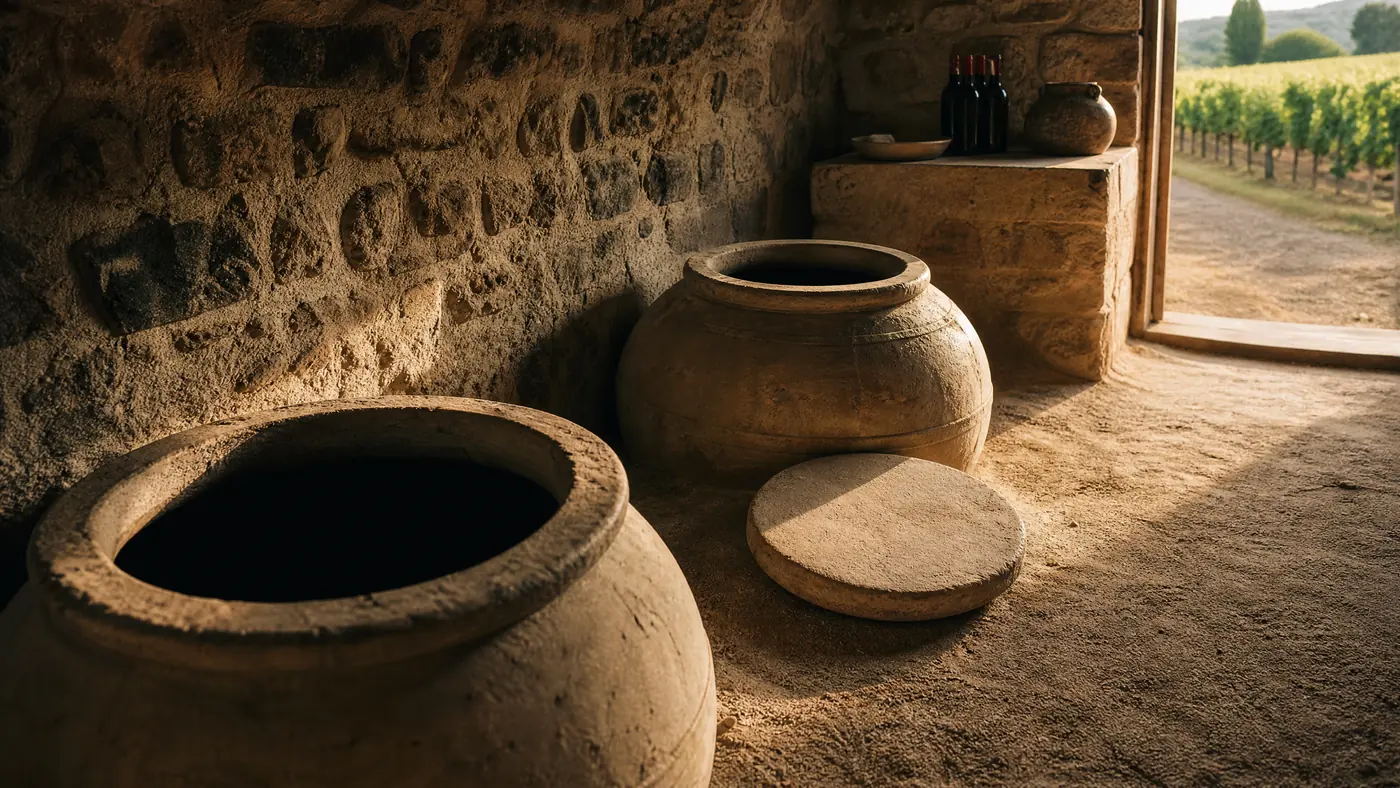
Walk into a family cellar in Kakheti and the first thing you notice is what you cannot see. The jars are under your feet. Only round clay mouths show in the floor, each one sealed with a lid, and below them sit the qvevri, big egg-shaped vessels holding this year's wine in the cool of the ground.
This guide explains the whole tradition in plain words: how old Georgian wine really is, what a qvevri is and how the wine is made in it, amber wine, the UNESCO listing, the marani, the supra and its toastmaster, chacha, and which tours from Tbilisi let you taste qvevri wine with the people who make it.
The quick answer
A qvevri is a large egg-shaped clay vessel buried in the ground, used to ferment, age and store wine. Grapes are pressed and poured in with their skins, stalks and pips, sealed, and left for five to six months. The method has been on the UNESCO list of intangible heritage since 2013, and most Kakheti wine tours include a tasting at a family cellar that still uses it.
Is Georgia the oldest wine country in the world?
Georgia has the oldest evidence of winemaking found so far. Grape pips and pottery from Neolithic villages in the south of the country date wine here to about 6000 BC.
The Georgian National Tourism Administration calls the country the cradle of wine, and the claim rests on archaeology. At Gadachrili Gora in Marneuli, in the south, a team of Georgian scientists and researchers from seven countries, led by the wine researcher Patrick McGovern of the University of Pennsylvania, studied residues and pottery and dated winemaking to around 6000 BC. Wikipedia lists the sites of Dangreuli Gora and Gadachrili Gora and the village of Imiri, with grape pips and qvevri fragments from the 6th millennium BC.
The people who made that first wine belonged to the Shulaveri-Shomu culture. Later finds tell the same story: gold and silver cups and jugs from the 2nd millennium BC, decorated with vines and grape leaves, now in the State Museum of Georgia. A legend says that St. Nino, who brought Christianity to Georgia in the 4th century, carried a cross made of vine wood.
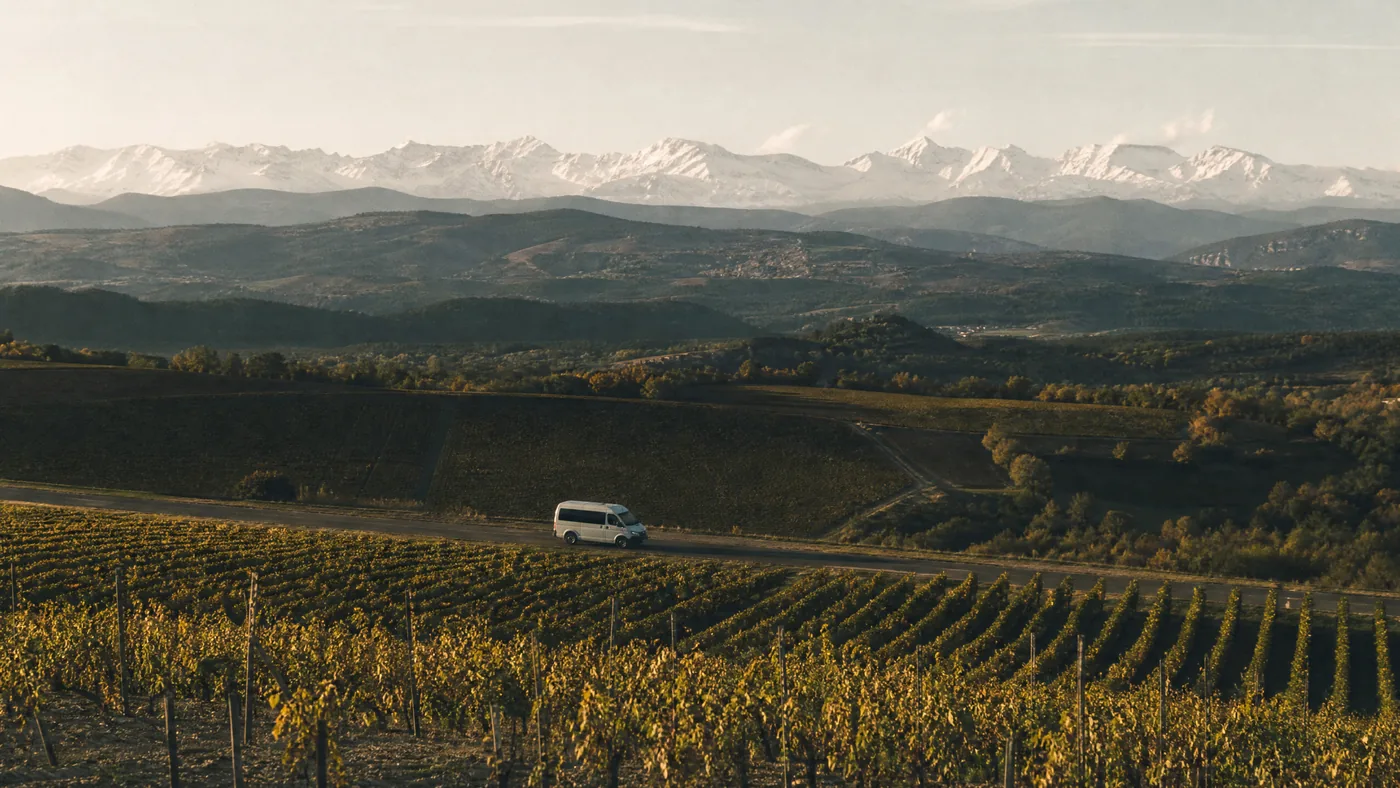
Kakheti is where that history is most alive today. It is the main wine region of the country, in the Alazani Valley below the Greater Caucasus, and Wikipedia credits it with seventy percent of Georgia's grapes. For the region itself, read our Kakheti day trip guide.
What is a qvevri?
A large clay vessel shaped like an egg, with no handles, buried so that even its neck sits below ground. Georgians use it to ferment, age and store wine.
Picture an amphora without handles, often taller than a person, set into the earth. Wikipedia gives sizes from 20 liters to as much as 10,000 liters, with about 800 liters being typical. In western Georgia the same jar is called a churi. You will also see the spelling kvevri: the Georgian word begins with a sound that English writes as either q or k.
Making a qvevri is a craft of its own. Families in a handful of villages pass it down, among them Vardisubani in Kakheti. The potter chooses the clay with care, because it shapes the mineral character of the wine.
Why bury it? The ground keeps the wine at a steady, cool temperature through the hot Kakhetian summer and the cold winter. A cellar full of qvevri looks like a floor dotted with round lids, and that is the picture to keep in mind when a guide lifts one open for you.
- Shape: like an egg, with no handles.
- Material: fired clay, lined inside with beeswax.
- Place: buried in the ground or in the floor of the cellar.
How is wine made in a qvevri?
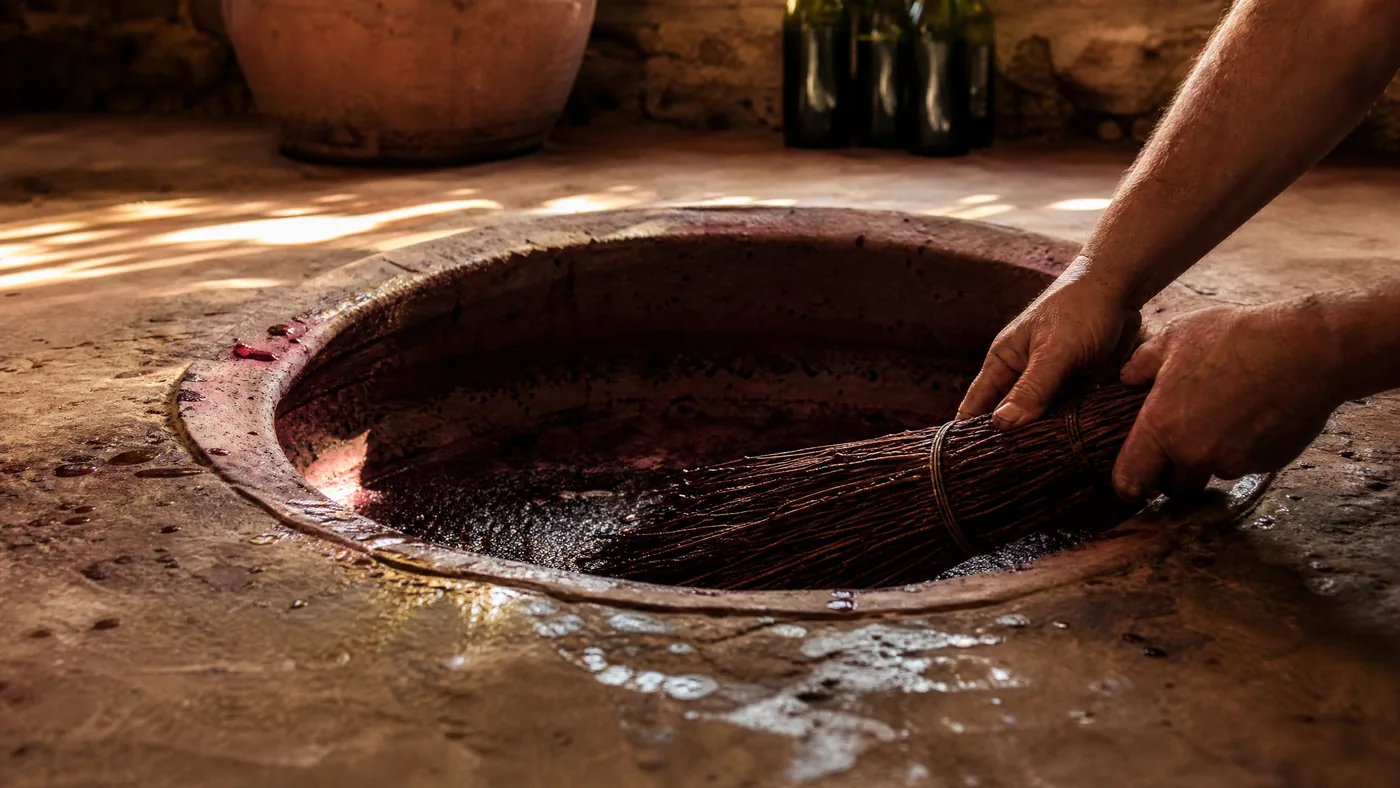
The grapes are pressed, and the juice goes into the qvevri with the skins, stalks and pips. The jar is sealed and the wine ferments for five to six months before it is drunk.
UNESCO describes the method in a few lines, and the tours repeat it in the cellar. The steps are simple. The time and the care are what count.
| Step | What happens | Source |
|---|---|---|
| Harvest (rtveli) | Families and neighbors pick the grapes together in autumn | UNESCO |
| Pressing | The grapes are pressed; juice, skins, stalks and pips all go into the qvevri | UNESCO; Wikipedia |
| Fermenting | The qvevri is sealed and buried; the wine ferments for five to six months | UNESCO |
| Decanting | The wine is drawn off the solids and bottled or served | Wikipedia, Qvevri |
| Chacha | The leftover skins and pips, also called chacha, are distilled into brandy | Wikipedia, Qvevri |
| Cleaning | The empty jar is washed, sterilized with lime and coated with beeswax again | Wikipedia, Qvevri |
In a sealed jar, a wooden lid goes on top and is covered with earth. Wikipedia notes that some qvevri stay closed for years. Makers say the wine is naturally stable and rich in tannins, which is why it keeps without much help.
It is late November 2026 as we write, a few weeks after the rtveli harvest. Across Kakheti the new wine is resting in sealed qvevri right now, and on the five to six month timeline in the UNESCO text, much of it will be opened in spring 2027.
What is amber wine?
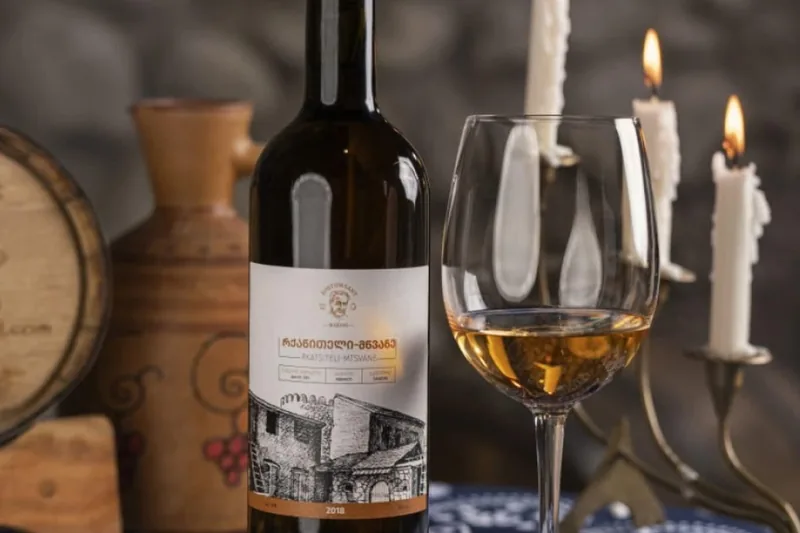
A white wine made like a red: white grapes stay with their skins, pips and often stalks in the qvevri for months. The wine turns a deep gold to amber color and gains grip and texture.
Abroad it is often called orange wine. In Georgia people say amber wine, and Kakheti is its home. Wikipedia calls white Kakhetian wine, macerated for several months with the skins, seeds and stems in a buried qvevri, the most unusual and archaic of the traditional Georgian styles.
There are local variations, and guides like to explain them:
- The Kakhetian method uses all the skins, pips and stalks. The wine is the most amber and the most tannic.
- The Imeretian method, from western Georgia, uses only about a tenth of them and no stalks. The wine is lighter.
- The Kartli style, from central Georgia, sits in between, with about a third.
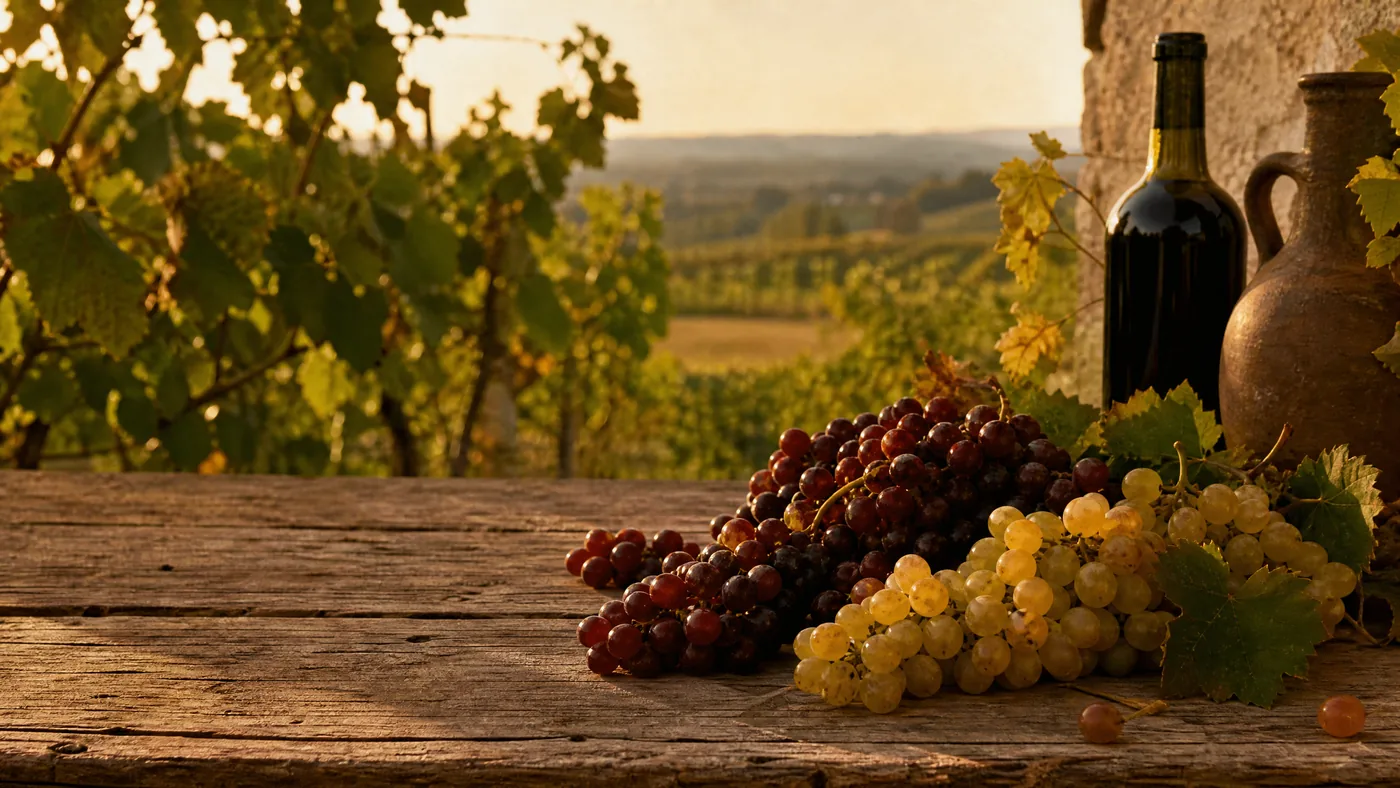
The grapes behind the best known amber wines are Rkatsiteli, Kisi and Kakhuri Mtsvane. Decanter describes Kisi as able to make both elegant aromatic whites and layered amber qvevri wines. Expect notes of dried apricot and nuts, a dry finish and a light grip of tannin, which is why amber wine is so good with Georgian food.
For the grapes one by one, see our guide to Georgian wines to try.
Taste qvevri wines with a Kakhetian family, bread from the clay oven at Badiauri, then Bodbe and Sighnaghi.
Check dates for the Kakheti, Sighnaghi and Bodbe tourWhen did UNESCO list qvevri winemaking?
In 2013. The ancient Georgian traditional qvevri winemaking method is on UNESCO's Representative List of the Intangible Cultural Heritage of Humanity.
UNESCO inscribed the element at its committee session in 2013 (decision 8.COM 8.13). Georgia had already put the qvevri and the tradition on its own national heritage list in 2011.
The UNESCO text reads like a portrait of a Kakhetian village. Knowledge passes through families, neighbors and friends, who harvest and make wine together. Children learn to tend vines, press grapes, collect clay and fire qvevri by watching their elders. Wine plays a part in everyday life and in religious and family celebrations, and the wine cellar is still considered the holiest place in the family home.
It is the method that UNESCO lists, not a single cellar or winery. That is good news for a visitor: the tradition lives in hundreds of small family cellars, and you can see it on an ordinary day out from Tbilisi.
What is a marani?
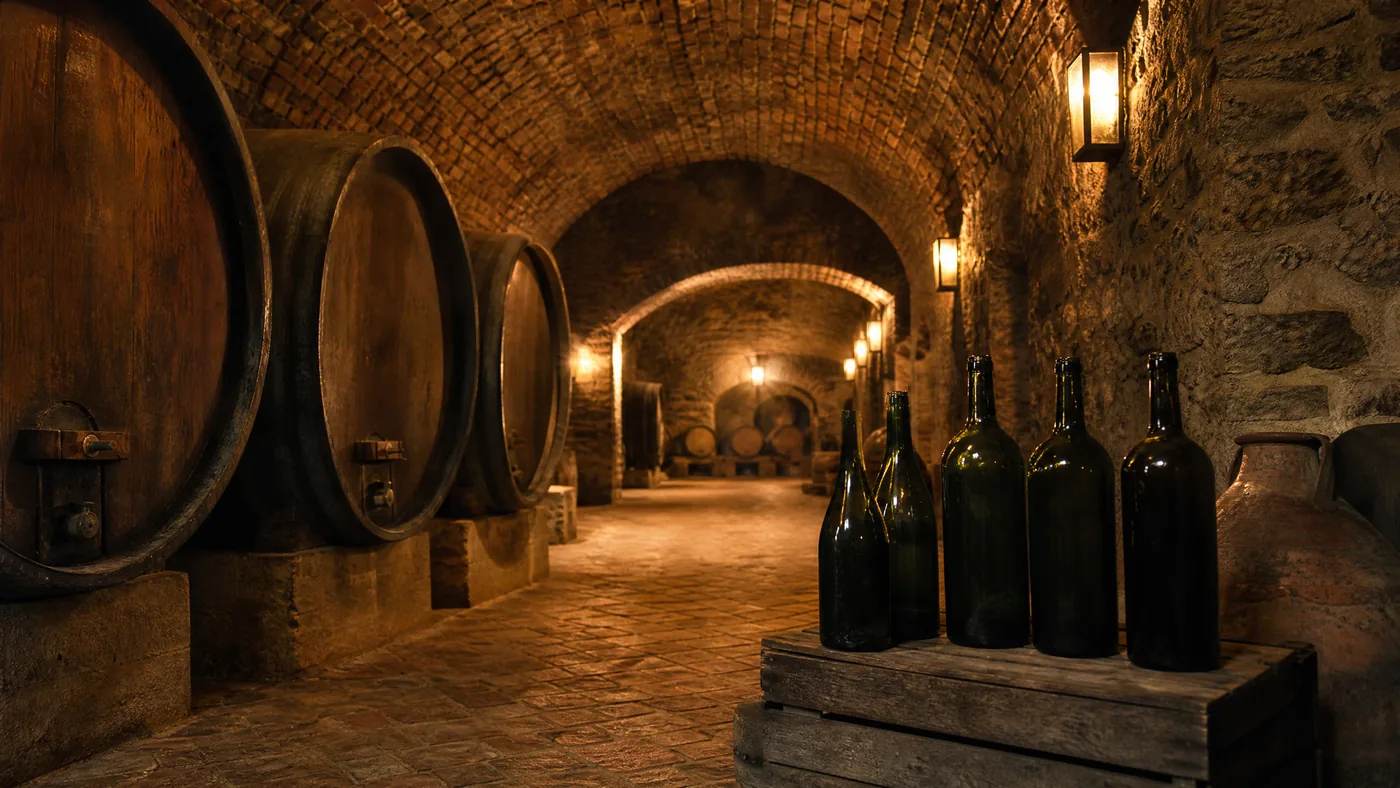
The marani is the wine cellar, the room where the qvevri are buried. Every wine family has one, from a village house to a historic estate.
The word appears on winery signs all over Kakheti. In a family house the marani can be a small vaulted room with a row of lids in the floor, wooden tools on the walls and a table for tasting. Wikivoyage describes Nekresi, near Kvareli, where qvevri are buried in the floor of the old monastery cellar.
At the other end of the scale stands Tsinandali, the estate of the 19th-century poet Alexander Chavchavadze. Wikipedia says he built Georgia's oldest and largest winery there, joining European and Georgian traditions, and that the dry white Tsinandali is still produced on the estate.
Several tours on this site take you inside a working marani:
- The Kakheti, Sighnaghi and Bodbe tour tastes qvevri wines with a local Kakhetian family.
- The tour with nine tastings pours three wines at a family winery that makes wine in qvevri, then five at KTW Winery.
- The Telavi family winery and cooking class is hosted by the owner of Rostomaant Marani, in his own cellar.
An afternoon in a family qvevri cellar in Telavi: the owner shows you the marani, you fold khinkali in a cooking class, then taste amber and red qvevri wines.
Explore the Telavi family winery and cooking class Tour detailsWhat are the supra and the tamada?
The supra is the Georgian feast, and the tamada is its toastmaster. Wine is poured toast by toast, and each toast has a theme.
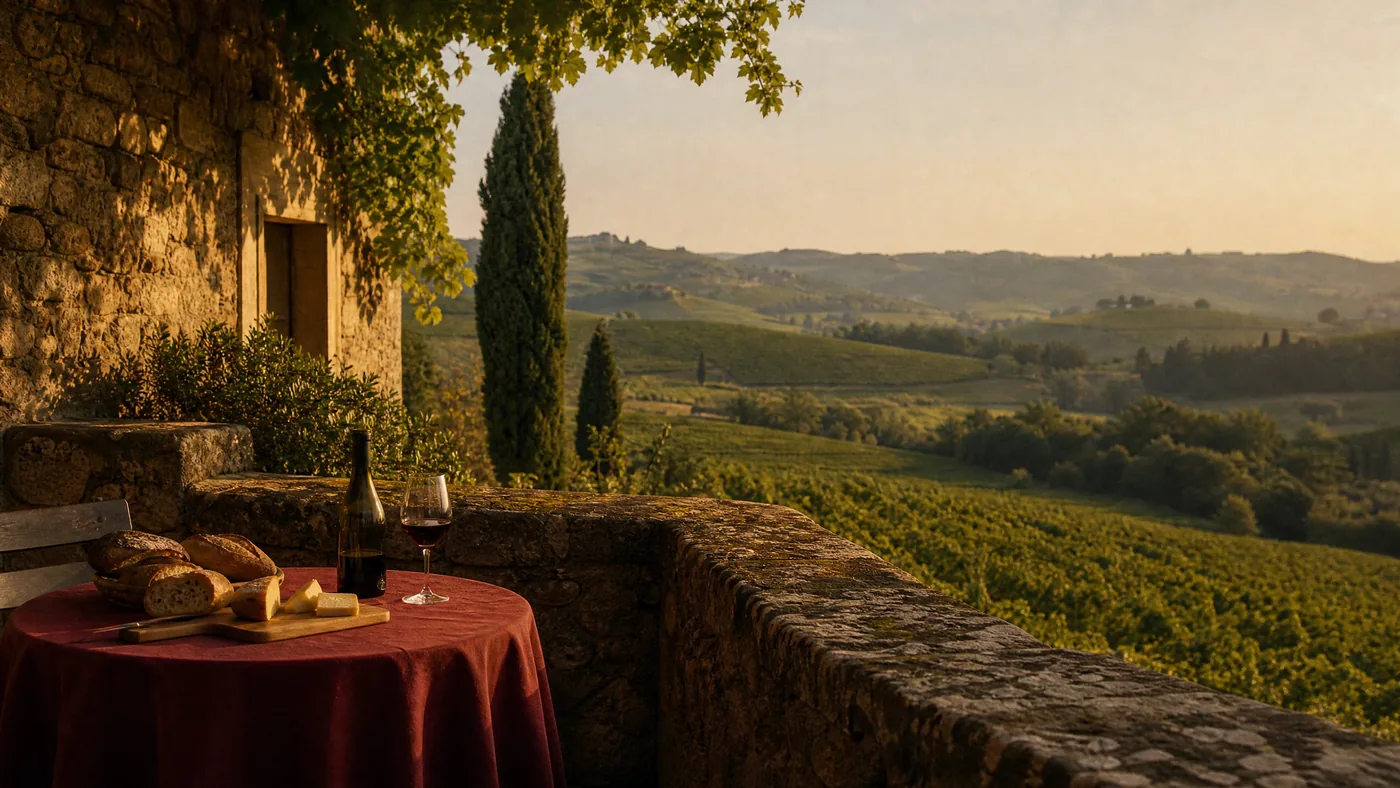
In Georgian, supra means tablecloth, and the table it covers is laden: bread, cheese, herbs, grilled meat and jugs of wine. Wikipedia explains that every supra, large or small, is led by a tamada, chosen by the guests or the host. The tamada proposes a toast and speaks about it. The guests raise their glasses, and the toast then goes around the table as others add their own words.
Toasts follow a rhythm: to God, to Georgia, to family, to friends, to the ancestors. Eating during a toast is fine, but talking over it is not. The traditions of the supra were added to the national list of Georgia's intangible heritage in 2017.
On a day tour you will not sit through a full feast, but the spirit is there. Hosts often raise a glass and say a few words before a tasting. A good guest listens, takes a small sip, and says gaumarjos, cheers. Tastings are small pours, and nobody will mind if you leave a glass unfinished.
What is chacha, and where can you taste qvevri wine on a tour?
Chacha is the clear grape brandy distilled from the skins and pips left after winemaking. Most Kakheti day tours pour a small taste of it alongside qvevri wine.
Wikipedia describes chacha as a pomace brandy, clear and strong: commercial bottles are around 40 percent alcohol, and homemade chacha can be much stronger. In 2011 Georgia registered chacha as its first geographical indication. Some producers age it in oak or flavor it with tarragon or honey. Treat it like the toast it usually comes with: one small sip.
Here is where qvevri wine, and often chacha, appear on the tours on this site, as the listings put it:
| Tour | Qvevri and tastings in the listing | Length | From |
|---|---|---|---|
| Kakheti, Sighnaghi and Bodbe tour | Qvevri wines with a family, a winery tasting, chacha, mulled wine | 9 hours | $18 |
| Tour with nine tastings | Three wines at a qvevri family winery, five at KTW, one at a bakery | 10 hours | $39 |
| Bodbe, Sighnaghi and Telavi day trip | Family chacha and wine in Manavi, chacha and wine in Telavi | 11 hours | $10 |
| Small-group wine tour | A family-run winery with traditional qvevri winemaking | 9 hours | $24 |
| Telavi family winery and cooking class | Amber Rkatsiteli and red Saperavi from qvevri, chacha, aged brandy | 4 hours | $60 |
Lunch is not included on these day tours, and the cooking class is the one that serves a full meal. Every product cancels free up to 24 hours before.
Frequently asked questions
Is all Georgian wine made in qvevri?
No. Many wineries also use steel tanks and oak barrels, and Wikivoyage notes that modern tanks are spreading. Several tours, such as the Kakheti, Sighnaghi and Bodbe tour, pour both European-style wines and qvevri wines so you can compare them.
Is amber wine the same as orange wine?
Yes. Both names mean white wine made with long skin contact. Georgians prefer the word amber, and the Kakhetian style, aged for months on the skins in a qvevri, is the classic example.
How do you say qvevri?
Roughly KVEV-ree. The Georgian word starts with a k sound that is written q in the common spelling, which is why you also see kvevri on labels.
Can you buy qvevri wine to take home?
Yes. Family cellars and wineries on the tours sell bottles. Our guide to Georgian wines to try explains what to look for and how to pack bottles for the flight.
Ready to book
Choose your tour
Free cancellation up to 24 hours before on every option. Prices are from-prices in USD and move with the season.

Kakheti, Sighnaghi and Bodbe Tour with Wine Tasting
Qvevri wine at a family home
Kakheti Wine Region Tour from Tbilisi with 9 Wine Tastings
- Certified guide and transport
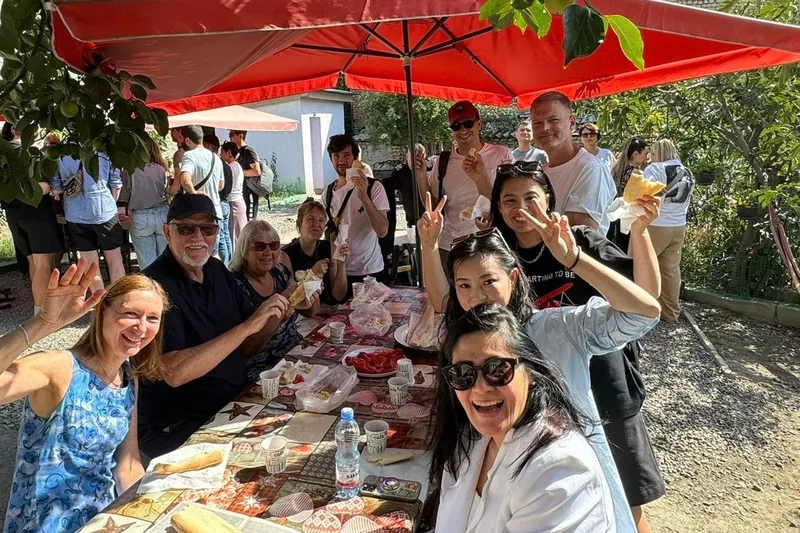
- 1 tasting at the bakery, 3 at the family winery, 5 at KTW
- Winery entrance fees